Cooperatives as Part of the Economy and the Future of Europe
24/03/2025
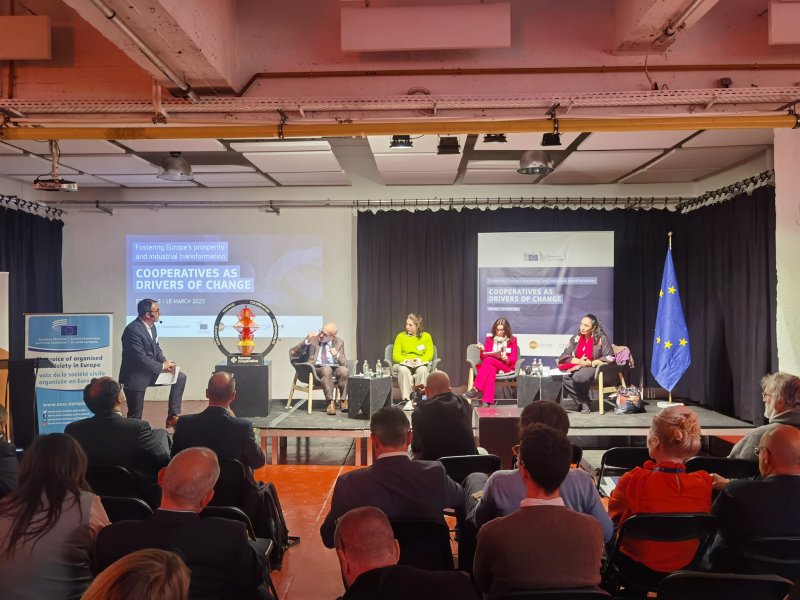
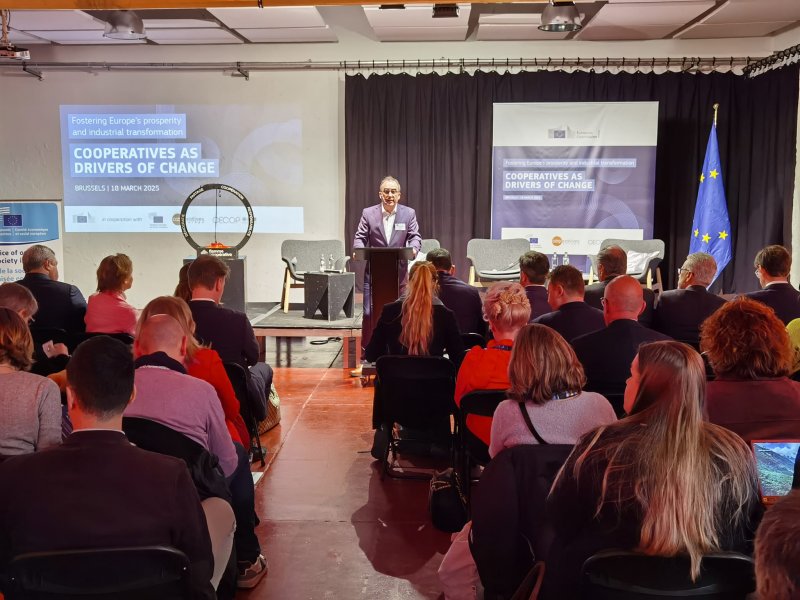
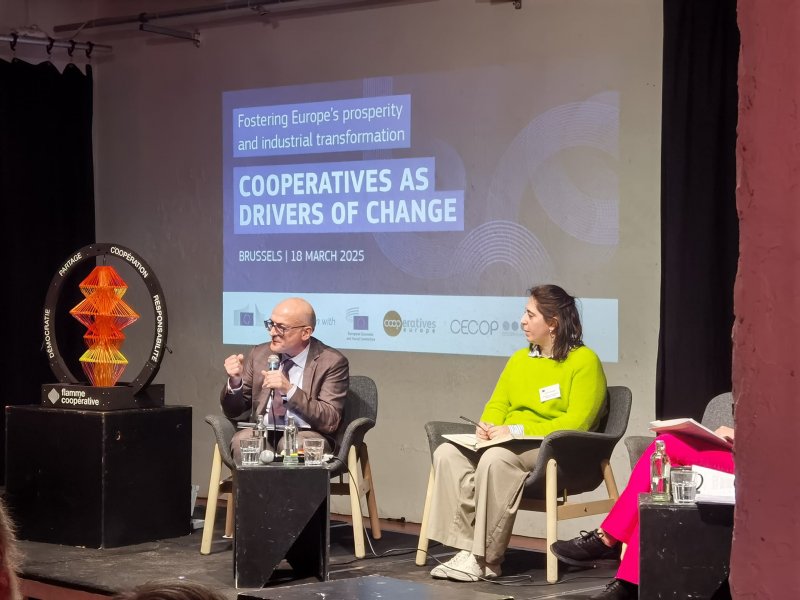
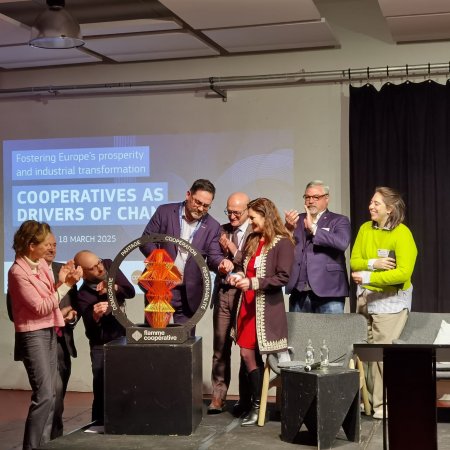 "Europe needs to improve in order to become more competitive, and social justice and equality are key elements of competitiveness. We must promote a cooperative vision for industrial policy—that is, an economy that places people at the center. A new industrial policy focused solely on arms production is dangerous; cooperatives stand behind the motto 'industry for peace'." This was stated by CECOP President Giuseppe Guerini during the conference "Cooperatives as a Driver of Change," held last week in Brussels.
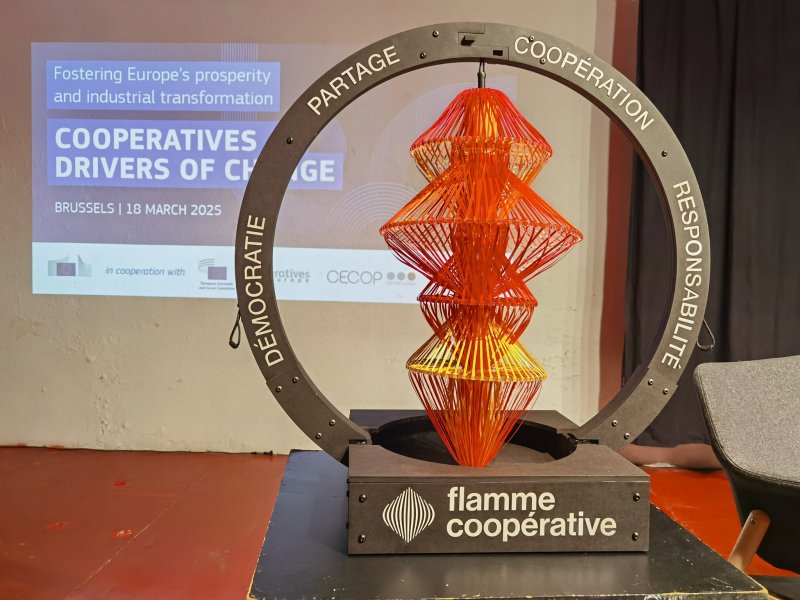
During the official opening, the "cooperative fire" was symbolically lit, representing diversity, inclusion, connectivity, and the principle of mutual support—values that lie at the very core of cooperatives.
The National Council of Production Cooperatives (NS na TPK), represented by its Chairman, Assoc. Prof. Vladislav Lazarov, participated actively in the event, which brought together Members of the European Parliament, politicians, international experts from various fields, university professors, and leaders and representatives of cooperative organizations. The conference featured lectures, seminars, and open discussions. Participants focused on the pivotal role of cooperatives in the European economy, outlining both the challenges faced and the measures that could foster the development of cooperative associations and individual enterprises.
Cooperatives constitute a major economic movement in Europe. There are 250,000 #cooperatives operating within the EU, employing more than 5 million people. In Italy, Germany, France, and Spain, cooperatives account for 10% of the economy. As voluntary associations rooted in democratic principles—including voting rights for every member, fair profit distribution, and a strong social dimension—they are becoming increasingly attractive to young people. They offer opportunities for decent work, professional development, and the chance to contribute to a broader social cause.
Global political developments necessitate that Europe fosters greater independence in its local production capabilities. Cooperatives possess production capacity that can be leveraged to make an even greater contribution to the economy and to European sovereignty within the current market landscape.
Cooperatives serve as a driving force for innovation, with successful initiatives already underway regarding the energy and digital transitions. This positions them as key players in the transformation of the European economy and the evolution of traditional sectors—making them not merely a part of the economy, but a part of the future.
Clear, harmonized legislation at the European Union level is essential to facilitate the operation of cooperatives and optimize their market presence, thereby fostering an inclusive business environment and driving better outcomes.
Promoting the cooperative model is of vital importance. During the conference, participants reached a consensus that this model should be incorporated into economics curricula at European universities. This would foster a better understanding of the nature of cooperative enterprises, stimulate interest in participation, and facilitate access to financing—which is currently limited.
Cooperatives offer a model that aligns perfectly with European objectives: competitiveness, sustainability, and a social focus. They generate added value and play a significant role in regional development, as they are rooted in local communities. Promoting their activities at both the national and European levels would yield results with both economic and social impacts across Europe.